İbrahim Çağrı KURT
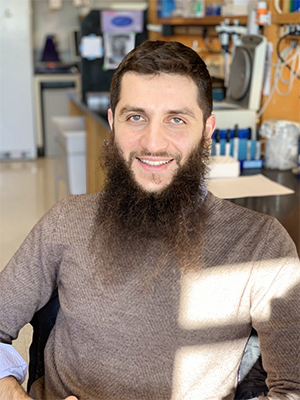

- Lisans: İ. D. Bilkent Üniversitesi
- Yüksek Lisans: Koç Üniversitesi
- Doktora: Harvard University
- CRISPR
- genome editing
- protein engineering
- protein language models
Araştırma
At the Kurt Lab, we focus on the next generation of genome editing technologies through a comprehensive, end-to-end approach that bridges computational biology and experimental science. We aim to discover and engineer novel CRISPR proteins to develop efficient and precise genome editing tools with desirable features. Our research has two arms:
1) Discovery of Novel Natural CRISPR Proteins
Our first area of focus is the exploration of Earth's vast microbial diversity to uncover new CRISPR systems with unique functionalities. By mining terabytes of metagenomic data from diverse environments—including the human and animal gut microbiomes, marine and freshwater ecosystems, hot springs, saline lakes, and subterranean caves—we aim to identify CRISPR proteins with desirable features not found in currently known systems. This data-driven approach allows us to tap into unexplored genetic reservoirs, potentially leading to expansion in genome editing capabilities.
2) Generation of Synthetic CRISPR Proteins via Protein Language Models (PLM)
Complementing our natural discovery efforts, we leverage state-of-the-art protein language models (PLMs) such as ProGen2 and ESM to design synthetic CRISPR proteins and guide RNAs. By training and fine-tuning these models, we generate genome editing tools with optimized characteristics such as smaller size to facilitate easier delivery into cells, altered or relaxed PAM preferences to expand the range of targetable genomic sequences, and potential low immunogenicity to reduce immune responses for safer therapeutic applications. This computational approach accelerates the development of customized genome editors tailored to specific research and industry needs.
As downstream to both approaches, we characterize the natural and synthetic candidates in vitro and in vivo in bacterial and mammalian cells, assessing their functionality, PAM preference, and enzyme kinetics. Functional candidates with desired features are engineered into second-generation base editors and third-generation prime editors.
We are always interested in passionate and hard-working masters, PhD, and postdoc candidates. Candidates are encouraged to contact Dr. Kurt at ibrahim.kurt@bogazici.edu.tr.
Seçilmiş Yayınlar
- Karl P, Zhang W, Ma J, Schmidts A, Lee H, Horng JE, Kim DY, Kurt IC, Clement K, Hsu JY, Pinello L, Maus MV, Joung JK, Yeh JR. “CRISPR prime editing with ribonucleoprotein complexes in zebrafish and primary human cells”. Nature Biotechnology, 2021 Apr 29, doi: 10.1038/s41587-021-00901-y
- Kurt IC, Zhou R, Iyer S, Garcia SP, Miller BR, Langner LM, Grünewald J, Joung JK. “CRISPR C-to-G Base Editors for Inducing Targeted DNA Transversions in Human Cells”. Nature Biotechnology, 2020 Jul 20, doi: 10.1038/s41587-020-0609-x
- Kurt IC, Sur I, Kaya E, Cingoz A, Kazancioglu S, Kahya Z, Toparlak OD, Senbabaoglu F, Kaya Z, Ozyerli E, Karahuseyinoglu S, Lack NA, Gumus ZH, Onder T, and Bagci-Onder T. “KDM2B/JHDM1B, an H3K36-specific demethylase, regulates apoptotic response of GBM cells to TRAIL”. Cell Death and Disease, 2017 Jun 29;8(6):e2897. doi: 10.1038/cddis.2017.288